Tuesday, June 14, 2016

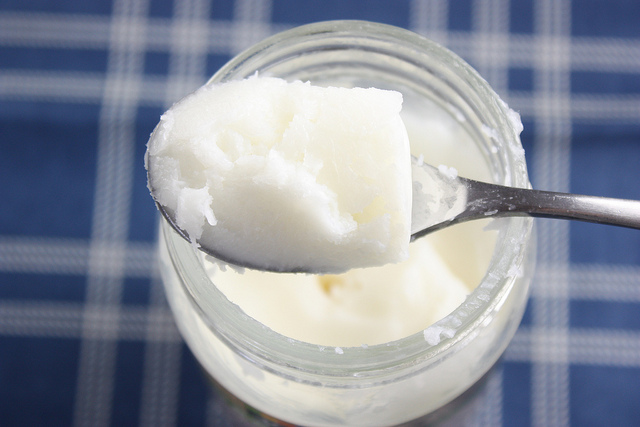
20 WAYS OF USING COCONUT OIL


Did you know that you can use coconut oil alone and do away with all your skincare products? 

Here are 20 ways of how you can use coconut oil as a natural oil to achieve radiant skin:

1. Use coconut oil as a natural butter that is great for your skin. Just slap it on!
2. Mix coconut oil with coconut sugar or regular sugar (it doesn't matter because it's so good already!) to make a luscious body scrub
3. Make coconut oil your go to body oil to be used along with body lotion
4. Treat cold sores by dabbing some of that nutty luscious oil on the affected areas
5. Rub coconut oil into nails and cuticles to keep germs at bay
6. Have a relaxing and detoxifying bath by adding coconut oil with ¼ cup of Epsom salt
7. Guard against diaper rash with a layer of pure coconut oil
8. Slap onto dry hands to keep them smooth and supple 
9. Use as a facial wipe to hydrate and achieve vibrant looking skin
10. Can be used as a homemade natural deodorant (if you don't mind the oiliness)
11. Provides relief against insect bites
12. Apply as an all natural ip balm to get rid of cracked and dry lips
13. Remove makeup without irritating your eyes 
14. Use as a massage oil to alleviate sore muscles. Add a few drops of essential oil for added therapeutic benefits
15. Use as a nourishing night cream to hydrate and repair your skin while you sleep
16. Moisturize your scalp and discourage dandruff
17. Use as a cost effective shaving gel to prevent ingrown hairs
18. Rub on skin to improve skin conditions and alleviate skin symptoms
19. Apply to reduce stretch marks
20. Provide relief from sunburn by reducing redness and soothing inflamed skin
We do not carry virgin coconut oil but we do have refined coconut oil that is ideal for skincare, lip balm, lotion and soap-making. Refined coconut oil does not contain the nutty rich coconut scent and is more shelf stable.

Email us if you have any enquiries at enquiry@craftiviti.com or pop by Craftiviti Craft Store at 10 Boulevard, Petaling Jaya, Malaysia.

If you found this post useful, please join us on Craftiviti Facebook or Instagram for more updates and demos!

Tuesday, June 7, 2016

8 BENEFITS OF JOJOBA OIL


Jojoba oil is actually not an oil but a liquid wax and the substance found in the oil is similar to human skin. Therefore, Jojoba Oil has a lot of benefits on your hair and skin. The benefits of jojoba oil are:

1. Jojoba oil acts as a deeply nourishing hair conditioner because of its rich moisturizing properties that are able to help strengthen hair follicles.

2. Ideal oil for hair scalp to reduce hair loss and hair damage.

3. Acts as a natural hair serum to add that healthy shine to your hair.

4. Helps stimulate hair growth

5. Can be used as a facial oil cleanser to clean away make up and dirt without stripping the skin off its nourishing oils.

6. This versatile and nourishing oil is suitable as a head to toe body moisturizer

7. For generations, people have been using this oil to fight acne, blackheads, pimples due to its antibacterial properties

8. This oil also helps to reduce wrinkles.

Usage tips


Our shop carries pure Jojoba Oil that is suitable for your skincare recipes.

· Use this oil direct on skin to moisturize.

. Add 1 tablespoon to 450g of Melt&Pour soap

· Add a few drops of this oil to your shampoo, conditioner or lotion for added skincare benefits.

· Add 2 ounces of Jojoba Oil, 10 drops of rosemary essential oil and 15 drops of tea tree essential oil to a small bottle to treat acne and oily skin

· Mix 1 ounce of Jojoba Oil and 1 ounce of grapeseed oil for skin treatment

· Add ½ cup of Jojoba Oil and ½ cup of coconut oil in a small bowl when usin

g it to protect your skin from the sun.

Email us if you have any enquiries at enquiry@craftiviti.com or pop by Craftiviti Craft Store at 10 Boulevard, Petaling Jaya, Malaysia.

If you found this post useful, please join us on Craftiviti Facebook or Instagram for more updates and demos!

Wednesday, May 25, 2016

EPOXY RESIN VS POLYESTER RESIN


Many people get confused between epoxy resin and polyester resin. So here's a quick summary to set things right. 

Clarity
Epoxy resin gives better clarity compared to polyester resin. While epoxy resins are not crystal clear like water, they still have more clarity compared to the yellowish tinge found in polyester resins.

Scent
Polyester Resin has a very strong smell and is often hazardous to inhale in large amounts. Epoxy resin has almost no fumes or smell which makes it more pleasant for you to work with it. However, it is important to have proper ventilation while working with both epoxy resins and polyester resins.

Price
Due to its formulated requirements, epoxy resin is generally more expensive than polyester resin. There is a significant price difference between both of them and if you are into jewelry making and craft, it is a more popular ingredient to use because of its lower cost.

Health
Polyester resins are made from volatile organic compounds and styrene, an ingredient that is said to kill brain cells. Epoxy resin is a healthier option for you to choose and this is why it is the go-to material for jewelry makers. 

Hardness
And lastly, epoxy resin is harder than polyester resin and more resistant to wear, cracks, peeling, corrosion and damage resulting from environmental and chemical degradation. Polyester resin is more fragile and flexible which makes it easier for you to do casting and mold.

Email us if you have any enquiries at enquiry@craftiviti.com or pop by Craftiviti Craft Store at 10 Boulevard, Petaling Jaya, Malaysia.

If you found this post useful, please join us on Craftiviti Facebook or Instagram for more updates and demos!


WHAT IS TUNG OIL?

Tung oil, also known as China wood oil, has been traditionally used for at least 2500 years in wood finishing and wood waterproofing. 

Instead of using lacquer or chemical base varnish for your wood, tung oil provides protection the natural way.

In olden days, this oil was used by boat builders to make their boats waterproof. 

If you are working with wood craft, it is important to understand more about this oil.

How to use Tung Oil?
Start by applying tung oil using a soft cloth or brush and then thoroughly wipe it off. Check after 1 or 2 hours to see if any extra oil has beaded on the wood surface and wipe it off too.

When to use Tung Oil?
Tung oil is often used for aesthetic appeal. Use tung oil when you are looking to give your wood work a warm colour and a slightly golden darkened colour.

Benefits of Tung Oil
There are plenty of benefits for using tung oil. The list below only applies to pure 100% tung oil:

  •       Waterproof or at the very least, it is highly water resistant
  •       Can be used to harden softer wood such as wood from palm tree or coconut tree. 
  •       Natural varnish and wood darkener

  •       Flexible and protects the wood that expands and contract
  •       Easy to apply and very forgiving during application
  •       Easy to re-apply when the original finish becomes damaged or worn
  •       Resistant to alcohol and acetone
Email us if you have any enquiries at enquiry@craftiviti.com or pop by Craftiviti Craft Store at 10 Boulevard, Petaling Jaya, Malaysia.

If you found this post useful, please join us on Craftiviti Facebook or Instagram for more updates and demos!


Monday, May 16, 2016

WHY USE EPOXY RESIN FOR JEWELRY MAKING?

Resins are an important jewelry making ingredient so picking your resin is essential. 

Resins are liquid plastics and they usually come in 2 parts - 1 part resin and 1 part hardener. Epoxy is a synthetic resin that dries clear, hard and strong. 

When both parts mix together in the correct ratio the chemical compounds begin to cure into a hard, clear and durable plastic. 
Epoxy Resin is easy to Use
When it comes to jewelry making, epoxy resin is highly recommended. 

You usually do not need a respirator mask while working on it because of its low toxicity level. However, safety precautions should still be followed. 

Epoxy Resin also mixes in easy enough combinations with one part epoxy resin and one part hardener or in some products like ours the mixing ration is 2 parts epoxy to 1 part hardener. 

Epoxy resin gives you the longest time to work on your jewelry project. The work time can sometimes stretch to about 20-40 minutes. 

On the other hand, Polyester resin is difficult to use and produces unpleasant fumes. However, Polyester resin is good while casting larger objects as Epoxy Resin tends to create a lot of heat during th curing process which may crack the piece. 

This is why epoxy resin is ideal for casting jewelry pieces. Jewelry parts like gems and crystals are small and easy to cast with Epoxy without creating too much heat during curing. 

Epoxy is also a self-levelling resin so it is ideal for making flat and crystal smooth glass surfaces. It is also a better choice for you to use in humid environments compared to other types of resins.

Because of its ease of use and its durability, epoxy resin is the best ingredient for you to use for jewelry making.

At Craftiviti, we have two different resins. You can find out more about them here...and here

Email us if you have any enquiries at enquiry@craftiviti.com or pop by Craftiviti Craft Store at 10 Boulevard, Petaling Jaya, Malaysia.

If you found this post useful, please join us on Craftiviti Facebook or Instagram for more updates and demos!

BENEFITS OF ST. JOHN'S WORTS CARRIER OIL


St John’s Wort Carrier oil is made with the buds of St John's Wort flowers. The flowers are yellow with star shaped petals. It grows in Europe, North and South America, Australia, New Zealand, and Eastern Asia. 

The plant requires a lot of sunshine to grow and it can reach up to 100cm tall. 

The flower gives off a soft, sweet and warm smell. However, St. John’s is not known for its perfume purposes. Mostly it is known for its healthful topical uses.

St. John’s Wort Carrier oil has great anti-inflammatory properties. This makes it a great carrier oil to use for:

•             Easing arthritis and your muscle pains
•             Moisturizes scaly and itchy skin
•             Soothes bug bites
•             Helps with stressed or broken skin

It also makes a soothing and moisturizing base for massage oils. You can apply generously on wherever the affliction lies. Just be sure not to expose your skin to the sun with this oil on. This oil also helps with bruised or reddened skin. Working as a de-stressor, it relaxes your skin.

St. John’s Wort Carrier oil is great at helping with stress-induced ailments of the skin, it also soothes and moisturizes your skin.

Email us if you have any enquiries at enquiry@craftiviti.com or pop by Craftiviti Craft Store at 10 Boulevard, Petaling Jaya, Malaysia.

If you found this post useful, please join us on Craftiviti Facebook or Instagram for more updates and demos!

PYROGRAPHY TOOLS AND TIPS


Pyrography is a craft to burn a design on a clean piece of wood. This activity is great if you like to draw since the two of them are very similar. 

You need a pyrography pen and a clean piece of wood to create your own piece.

You only need very little tools to start doing this. With many types of pens and woods in the market, it is important that you pick the correct ones. 

There are 3 types and they are wire-nib burners, laser cutters, and solid-point burners.

Wire-nib burners have regulated temperature controls and the nibs are interchangeable on some models. 

The solid-point burners work like soldering irons because they have a tip that is used to burn the wood. 

Laser cutters can scorch the wood instead of cutting it.

You should also be careful on the type of wood you choose. Never use treated wood as this wood is treated with special chemicals. 

You may also want to obtain some carbon paper. Carbon paper allows you to draw your desired design on it. You can then use it to trace the design onto the wood. Using Carbon paper also allows you to make duplicates of your piece.

Email us if you have any enquiries at enquiry@craftiviti.com or pop by Craftiviti Craft Store at 10 Boulevard, Petaling Jaya, Malaysia.

If you found this post useful, please join us on Craftiviti Facebook or Instagram for more updates and demos!

HISTORY OF CANDLE MAKING

Candle making has been around for a very long time and it dates back to Ancient Egypt and the Roman Empire.

Ancient Egypt and the Romans
Tallow, which is cattle and sheep grease were used in candle making. The Egyptians used this for wax with Papyrus as the wick. Romans also used tallow but their candles were a bit more similar to ours. Flax, hemp and/or cotton were used as wick.

Early Asian Cultures
The Chinese used rice paper, a specific indigenous insect as well as plant seed in their candle making. In Japan, candles were made from tree nuts. Indians made wax from boiling fruit.
Middle Ages
Beeswax began to be used in candle making. However, it was in short supply and only the wealthy could afford to burn it.

Colonial America
Settler women found that if berries from the bay-berry shrub were boiled it would give out a nice smell during burning. However, this took a lot of work and time .

18th Century America
The whaling industry took off during this time mostly because they needed oil to light street lamps and homes. Spermaceti wax was made from whales. This wax worked well but it didn’t smell too great.


19th Century
Candle making machines came about during this period and new waxes were patented. The braided wick was also invented. This wick allowed the wax to burn evenly and the candle stayed lit longer. Halfway through the century, paraffin wax came on to the scene which not only made candles into mass consumer product, it was also a lot cheaper. 

Email us if you have any enquiries at enquiry@craftiviti.com or pop by Craftiviti Craft Store at 10 Boulevard, Petaling Jaya, Malaysia.

If you found this post useful, please join us on Craftiviti Facebook or Instagram for more updates and demos!

Thursday, May 12, 2016

WHAT ARE CARRIER OILS?


Many people get confused between carrier oils and essential oils.

The International Organization for Standardization (ISO) in their Vocabulary of Natural Materials (ISO/D1S9235.2) defines an essential oil as a product made by distillation with either water or steam or by mechanical processing of citrus rinds or by dry distillation of natural materials. Following the distillation, the essential oil is physically separated from the water phase.[1]


On the other hand, carrier oils also known as base oils are vegetable oils usually made from the fatty portion of a plant. They are also categorized as natural plant oils.

Types of Carrier Oils
Some of the more popular Carrier Oils that you can start to explore are:

  • Sweet Almond Oil
  • Avocado Oil
  • Jojoba Oil
  • Evening Primrose Oil
  • Rosehip Oil
  • Macadamia Oil
  • Coconut Oil
  • Argan Oil
  • and many more.
Carrier oils of the cold pressed kind have a slight aroma depending on the plant. Refined carrier oils on the other hand have a neutral smell. One of the most notable difference between these cold pressed and refined, is that refined oils have a longer shelf life and is more stable of the two.
Carrier oils are suitable for moisturizing and great for maintaining a healthy skin and hair.

What Can You Do With Carrier Oils?
· Carrier Oils are used to dilute essential oils so that they can be safely applied to the skin


· Certain Carrier Oils like Jojoba Oil penetrates directly into the skin, scalp and hair shaft


. Most carrier oils can be used directly on skin as a deep moisturizer or massage oil

· Carrier Oils like Coconut Oil is great for making salves and hair masks

. Rosehip seed Oil make a great non-greasy facial oil and a favorite amongst the ladies

· Avocado Oil is great for making homemade hair serum due to its vitamins, fatty acids and proteins

· Castor Oil and Olive Oil are good choices of Carrier Oil for making lip balm as they leave a soft and glossy shine on your lips

. Carrier oils are used as a base for making soap. It is best to have good quality carrier oils to ensure the soaps you create can do wonders to your skin

Email us if you have any enquiries at enquiry@craftiviti.com or pop by Craftiviti Craft Store at 10 Boulevard, Petaling Jaya, Malaysia.

If you found this post useful, please join us on Craftiviti Facebook or Instagram for more updates and demos!

Wednesday, May 11, 2016

DIY HANDMADE CRAYONS

How to Make Non-toxic Crayons with Beeswax
Ever wanted to make your own handmade and healthy crayons? If you are a health conscious mum that worries about your kids chewing on waxy petroleum based crayons that are lying around the house, that worry is gone now with this DIY healthy crayon recipe below:

The Recipe
  •          Start by using equal weights of beeswax and soap (you can also use carnauba wax)
  •          Use an inexpensive white bar soap to grate
  •          Chop part of the beeswax in medium pieces
  •          Pour the medium pieces of beeswax into a microwave safe container
  •          Melt the soap and beeswax in the microwave or using a double boiler
  •          Proceed carefully as the liquid will be very hot
  •          It is important to watch the mixture closely so that it doesn’t boil and doesn’t add air bubbles to your healthy crayons
  •         If you see air bubbles, let the mixture set for a few minutes and gently stir it to remove them
  •          After the soap and beeswax are melted, mix the colours in carefully. Do not use liquid coloring as it won't mix with the wax. You can use powdered food coloring or natural ingredients like tumeric and cocoa powder
  •          Add more colours if you want it to be more vibrant
  •          Lightly grease the mold that you will be using
  •          For molds, you can use ice cube trays, mini muffin pans, disposable mini paper cups or even make your own mold using foil paper
  •          Pour the melted mixture into the mold and let it dry completely
  •          Finally, remove the crayons from the mold and they are ready to be used

Email us if you have any enquiries at enquiry@craftiviti.com or pop by Craftiviti Craft Store at 10 Boulevard, Petaling Jaya, Malaysia.

If you found this post useful, please join us on Craftiviti Facebook or Instagram for more updates and demos!

Tuesday, May 10, 2016

POPULAR CANDLE SCENTS YOU COULD TRY

Most people buy candles to scent their homes. Scents help set you in the right mood. They can project a sense of coziness, warmth or even mystery depending on the mood and setting.

Some candle scents are more popular than others. In the scent library there are thousands of scents depending on what you like. Now, if you are making candles as gifts or for generic use, here are the top 5 most liked candle scents.  
Things like cookies fall under this category and that leads you to think about mum’s baking. It is a comfortable place if you are to be surrounded by things like apple pie, ice cream, and on a popcorn movie night in home. 
This scent is a throwback to your childhood memories - a reminder of pool parties, BBQ’s and lots of sugar. Lemon fragrance oils makes a great pick me up scent. Ideal for drowsy mornings or to keep the mood upbeat at dinner parties.
Coffee is a well-loved scent. Coffee helps to keep you awake and it is something that is very useful in today’s hectic world. In fact every kitchen should have a coffee candle waiting to be burnt. Certainly adds atmosphere to any home. 
This scent is relaxing and soothing to the mind and body. Lavender is known mostly for its calming effects. This is could something sought for after being on the go all day.
Imagine having rose petals sprinkled around the house. Rose sets the mood for a light and relaxing day. In fact most flower scents have this effect. It's the perfect scent to accompany a long luxurious bath. 

Email us if you have any enquiries at enquiry@craftiviti.com or pop by Craftiviti Craft Store at 10 Boulevard, Petaling Jaya, Malaysia.

If you found this post useful, please join us on Craftiviti Facebook or Instagram for more updates and demos!

HOW TO COLOUR SOAP NATURALLY

 There are many ways to colour your soap while keeping it natural. Here are few of the natural soap colouring ingredients.

Oxides or Micas
Oxides or micas comes in many different shades. A small bag of oxide or soap mica will colour a lot of soap. Adding too much of this ingredient may change the texture of your soap so it is best to do a small test batch. Important note about using this ingredient is that you will need to get it from a reputable supplier. Many micas and oxides in the market today contain minerals and chemicals that can be harmful to the skin. Always use micas or oxides that are labeled skinsafe. 

Clay
Clays are wonderful addition to soaps. Not only do they help detox the skin, they also provide deep cleansing. There is French green clay which turns the soap green, Rhassoul makes soap brown and Bentonite which is a light green. Rose clay turns your soap into purple or red colour and Red Kaolin makes the soap red. 

Seaweed Powder
Grind some dried seaweed into powder to give your soap a brown or green colour. However because this is a natural source it is very prone to fading.

Food
Food such as molasses can tint soaps. Berries and vegetables mashed can also be added to your soap. Oats provide wonderful cleansing scrub effect and will turn your soap into a milky white tint. Cocoa Powder, beetroot powder, spirulina and a host of other natural food powders can colour your soaps naturally. 

However, be careful when adding fresh fruits or vegetables to M&P soap bases as it will soften the soap and because there is a lack of preservative, these organic ingredients may spoil or shorten the shelf life of the soap. 
Coffee
You can use instant coffee powder or cold brewed ground coffee.  This soap will be dark brown and will also have a light scrubbing effect. You will notice a very faint scent of coffee. Add coffee fragrance oil for extra boost of scent. 

Activate carbon
Activated carbon is the ground up particles of natural charcoal. This product will turn any soap into a distinctive jet black block. The carbon also acts are wonderful deep skin cleanser and detox. Activated carbon soap has the ability to absorb pollutant and dirt from skin. 
When it comes to naturally coloring your soap, always note that the ingredients their colors will come out differently between CP process and M&P soap process. 

Email us if you have any enquiries at enquiry@craftiviti.com or pop by Craftiviti Craft Store at 10 Boulevard, Petaling Jaya, Malaysia.

If you found this post useful, please join us on Craftiviti Facebook or Instagram for more updates and demos!

JOIN US ON FACEBOOK