Showing posts with label get to know. Show all posts

Thursday, November 7, 2019

Our Top 3 Uses for Lemon Essential Oil


If you think about a smell that’s commonly associated with cleanliness and pleasantness,  the first one that pops into your mind would most probably be lemon or other citrus scents. Just smelling citrus can be refreshing, but that’s not all to it.
For today’s post, we’ll be focusing on Lemon Essential Oil, whose scent can perk you up. It’s purported to have powerful anti-microbial activity, and it can disinfect surfaces. Some also swear that it can help improve the condition of your skin, reduce excess sebum production, and eliminate dandruff! With so many uses for this amazing essential oil, it can be a little overwhelming for those who don’t know where or how to start using it. So, here’s our Top 3 uses for it!
craftiviti lemon essential oil yein and young
1. Air Freshener
Don’t have good ventilation at home? Dislike the smell of cooking/food permeating your space after you’re done eating, or simply want to freshen up spaces that feel stuffy/has stale air? You can add up to 20 drops of lemon essential oil to 18ml of water in a 20ml Amber Spray Bottle and give it a good shake before spraying the area.
Pssst! All citrus-type essential oils are photosensitive. It’s best to keep them in amber glass bottles to protect them from UV light, and also because they break down plastic bottles.
If you’re not a fan of multiple shakes before using this spray, you can add in Polysorbate-20 (an emulsifier which is used to bring small amounts of oils into a watery environment). The amount of Polysorbate-20 that you’ll need to add is equivalent to the amount of lemon essential oil added. So…
With Polysorbate-20
20 drops of Lemon Essential Oil + 20 drops of Polysorbate-20 + 18ml of Water
Without Polysorbate-20
20 drops of Lemon Essential Oil + 18ml of Water
51
2. Facial Oil
Anti-inflammatory, antioxidant, detoxicant, and balancing is just a few of the properties and benefits lemon essential oil has for the skin. By adding 12 drops of lemon essential oil to 30ml of jojoba oil + sweet almond oil, you’ll get a moisturizing, skin balancing, detoxing and relieving, anti-inflammatory and antioxidant facial oil. All you need is a amber bottle with a dropper cap to store this facial oil.
Pssst! This works as a body and hair oil too! When applying to your hair, use it as a hair oil mask. Leave it in your hair for a minimum of 15 minutes before shampooing and rinsing.
12 drops of Lemon Essential Oil + 15ml of Jojoba Oil + 15ml of Sweet Almond Oil
*Note: If this oil is too ‘heavy’ for you, you can reduce the amount of jojoba oil and increase the amount of sweet almond oil instead.
Fresh lemon with lemon essential oil on white background.
3. Insect Repellent
Thanks to the tropical weather we experience in Malaysia, there’s an abundance of bugs and lizards everywhere and not many of us are fans of them. Add 10 drops of lemon essential oil, 15 drops of tea tree essential oil or eucalyptus essential oil and a pinch of menthol crystals to some refined coconut oil in a wall burner. Allow the scent to envelop your room and you’ll have a pretty efficient insect repellent that also has other aromatherapeutic benefits like clearing blocked noses and boosting your mood!
10 drops of Lemon Essential Oil + 15 drops of Tea Tree / Eucalyptus Essential Oil
+ a pinch of Menthol Crystals + Refined Coconut Oil
happy craftingbuy it

Monday, October 14, 2019

How Plant Powders Are Made


In forms like extracts, oils and powders, plants have always been incorporated in skincare. For instance, rose is popular for being antibacterial, anti-inflammatory, and having antioxidants—usually infused in products meant to fight acne, reduce redness, boost moisture in skin. Orange is added for it’s richness in vitamin C which helps to even out your skin tone, and aloe vera is a known healing plant.
There’s also ginger root which can help stimulate blood circulation, and pine bark extract with it’s ability to increase hydration and elasticity of skin. So, it’s clear that when used in the right way, plants can do wonders for our skin!
Natural oraganic homemade soap making
For today’s blog post, we’ll be talking about how plant powders—one of the forms in which plants are incorporated into skincare—are made. Like how there is a variety of plant powders, there’s also a few ways to produce them.
~ * ~
moringa_powder1. Grinding into Fine Powder
Powders like green tea powder, mint powder and moringa leaf powder are made using the leaves of their plant which has been dried and then, ground into fine powders. This is also how some ginger root powders, flower powders (like lavender, rose, calendula, etc.) and a few others are made.

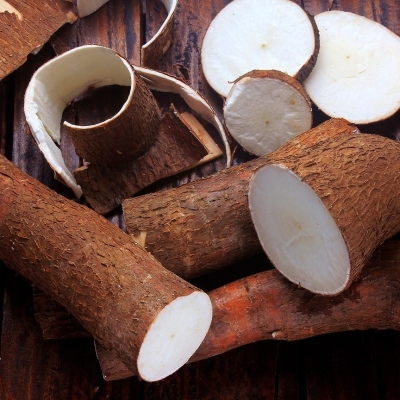
fresh cassava and peels and slices on rustic wooden table2. Starch Production
Certain plant powders like arrowroot powder are actually starch. These plant powders are made by separating the starch from plant root which has been cut and mashed into pulp. This pulp is strained through a screen to obtain fine starch which is then, dried and ground into fine powder.

3. Spray Drying
organic_strawberry_powder
While some powders like lemon powder and beetroot powder can be made by grinding the rind (for lemon) or the entire root (for beetroot), there’s another way for these powders to be made and that’s spray drying. This process involves spraying concentrated fruit juice in a chamber with hot air, allowing the droplets to dry before the dried particles are separated and filtered. Some of Craftiviti’s plant powders that are created through this process are Organic Lemon Powder, Organic Strawberry Powder and Organic Mango Powder.
~ * ~
Among the three, it can be said that plant powders made using the spray drying and grinding processes would hold the most nutrients and are therefore, more beneficial to us. However, this doesn’t mean that plants powders that are essentially starch, aren’t beneficial at all. All plant powders have their own pros and cons. So, depending on which formulation they’re incorporated in, they can either give your DIY personal care products a boost, or not.

Thanks for reading! We hope this helps ❤️

happy crafting
buy it

Tuesday, October 1, 2019

We Tried Making Resin Petri Dishes and Well…This Happened


Created by Josie Lewis, the Petrified Rainbow (also known as Resin Petri Dish and Resin Coasters) is a gorgeous, unpredictable type of resin art where a rainbow (or any other mix of colors used) is frozen in motion in a petri dish made of resin.

Awed by its beauty, we decided to give it a go and scoured the Internet for tutorials. Fortunately, our favorite site on all things resin art acrylgiessen.com has a tutorial just for Resin Petri Dishes! We got to work, setting aside the necessary tools and materials for this experiment but we hit a snag with every try and learned an important lesson:
Just like how not all epoxy resin is made equal, not all alcohol inks are made equal as well.
We used two types of Epoxy Resin for our attempt to make Resin Petri Dishes—the first is our own brand of Clear Epoxy Resin, and the second is Alumilite’s Amazing Clear Cast Epoxy Resin. For alcohol inks, we used Semiramis’ Alcohol Inks.
As noted by acrylgiessen.com, if the alcohol ink spreads immediately after being dropped into the resin, then the resin is pretty fluid. If it doesn’t spread much, then the resin has started to cure slightly. Unfortunately, this isn’t the case for both of the epoxy resin we used.
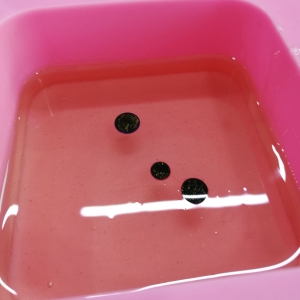
IMG_20190920_125610
As you can see in the above picture, despite us immediately dropping ink into our resin after we’ve combined the resin and the hardener, it appears that our epoxy resin is too thick for our alcohol ink to penetrate it. We did the same for Alumilite’s and our alcohol ink couldn’t penetrate it as well.
So, in effort to save it, we mixed the resin with the alcohol inks and attempted to created petrified clouds of gold using a mixture of our 99.8% Isopropyl Alcohol and Aztec Gold Mica. The mica powder + Isopropyl Alcohol combo worked well!
IMG_20190920_125613
IMG_20190927_173544
We also noticed that despite using the same amount of alcohol ink (10 drops) and mica+isopropyl alcohol (10 drops), the intensity of the color differs between the two brands of Epoxy Resin. Semiramis’ Alcohol Inks are brilliant for coloring epoxy resin
IMG_20190927_173610
Top – Alumilite       Bottom – Craftiviti
Though, we did keep one (using Craftiviti’s Clear Epoxy Resin) as it is with the un-mixed alcohol inks as a reference. The Epoxy Resin cured completely in 24 hours, but the alcohol ink never dried. We left it aside for a few more days but it stayed wet!
IMG_20190927_173720
Afterwards, we added another layer of Epoxy Resin just to see what happens and well, the result is a (rather pretty) bleeding Epoxy Resin sandwich 😂
So, as with all art and crafts, it’s always best to do little tests first. Don’t go full-on until you’re sure that a technique will work!
That aside, just because we failed this time, doesn’t mean that we’re going to stop trying! Stayed tuned for when we finally figure out a tutorial for Resin Petri Dishes that won’t fail 💪

Have you tried making a Resin Petri Dish before? How did it turn out for you? We’d love to hear about your experience and thoughts down below!
Thanks for reading ❤️
happy crafting
buy it

Wednesday, September 11, 2019

Top 6 Essential Oils for Haze Season + Quick and Easy Herbal Roll-On DIY


With the haze getting worse in Malaysia, it’s a definite that our lungs are working harder than usual to defend themselves from the dust and whatever fine particles we breathe in. So, aside from drinking herbal tea or turning to medicine to clear your lungs, you can  also incorporate these essential oils into your daily routine! We’ll also leave a super quick and easy herbal roll-on DIY at the bottom for you so you can have your own pocket aromatherapy 😊
organic_eucalyptus_powder
1. Eucalyptus Essential Oil
If you’re thinking that Eucalyptus Essential Oil smells like Vicks VapoRub, you’re not wrong! Eucalyptus Oil is one of the active ingredients in Vicks VapoRub, and it (and the essential oil) is a great natural decongestant. Inhaling steam with Eucalyptus Essential Oil can help reduce and loosen mucus, so that you can cough it up.

672. Peppermint Essential Oil
There are a number of natural products for respiratory conditions which contains Peppermint Oil, be it the menthol crystal version of the essential oil version. When inhaled, peppermint creates a cooling sensation has a sharp enough scent that will not only perk you up but also help clear congestion. (Pssst! Many insects are also repelled by the smell of peppermint.)

Fresh Rosemary Herb grow outdoor. Rosemary leaves Close-up.
3. Rosemary Essential Oil
Aside from being great for soothing muscles, treating dandruff and skin infections, Rosemary Essential Oil contains cineole (like Eucalyptus) which can aid in breaking up mucus in the respiratory passages and reduce inflammation, thus clearing congestion. (1)

tea tree4. Tea Tree Essential Oil
Well known for it’s ability to eliminate bacteria, viruses, and fungi, and it’s antiseptic and anti-inflammatory properties, Tea Tree Essential Oil can prevent the growth of bacteria which causes sinus infections and respiratory issues. Inhaling steam with Tea Tree Essential Oil can help treat and ease the effects of coughs and colds.

cedarwood essential oil craftiviti eo5. Cedarwood Essential Oil
With a warm and smoky aroma, Cedarwood Essential Oil can be used to soothe asthma, congestion, cough, phlegm buildup, and other respiratory discomforts. It has antibacterial, anti-fungal, anti-inflammatory and calming properties (which helps to relax muscles, promote sleep and relieve anxiety).

frankinscense craftiviti essential oil eo6. Frankincense Essential Oil
Often used in incense and perfumes, Frankincense Essential Oil is traditionally valued for it’s positive effects on the respiratory system. It has been noted in many medicinal studies for it’s ability to treat coughs, catarrh, bronchitis, and asthma. (2) (3)

~ * ~
DIY Herbal Roll-On
What You’ll Need
  1. Amber Glass Roll-On Bottle (to protect the contents from UV light!)
  2. Sweet Almond Oil (Or any other carrier oil of your choice!)
  3. Any of the 6 Essential Oils Listed Above
Instructions
  1. Pour in 9ml of sweet almond oil into the amber glass roll-on bottle. (If you’re using a different container, pour until the neck of the container or until it’s 95-98% full).
  2. Add in up to 6 drops of essential oil.
    *Note: Generally, we recommend 5 drops of essential oil for every 10ml of carrier oil to avoid any negative reactions due to skin sensitivity.
  3. Put on the stopper with the metal ball and shake the bottle before using.

We hope this post helps you ❤
happy crafting
References:
  1. Fischer, Juergen, and Uwe Dethlefsen, “Efficacy Of Cineole In Patients Suffering From Acute Bronchitis: A Placebo-Controlled Double-Blind Trial”, Cough, 9 (2013), 25 <https://doi.org/10.1186/1745-9974-9-25&gt;.
  2. Hamidpour, Rafie, Soheila Hamidpour, Mohsen Hamidpour, and Mina Shahlari, “Frankincense (乳香 Rǔ Xiāng; Boswellia Species): From The Selection Of Traditional Applications To The Novel Phytotherapy For The Prevention And Treatment Of Serious Diseases”, Journal Of Traditional And Complementary Medicine, 3 (2013), 221-226 <https://doi.org/10.4103/2225-4110.119723&gt;.
  3. Wakefield, Mary Elizabeth, “Special Treatments”, Constitutional Facial Acupuncture, 2014, 267-276 <https://doi.org/10.1016/b978-0-7020-4947-7.00008-7&gt;.
Pssst, we're also available at Craftiviti.com!

JOIN US ON FACEBOOK